HELLENIC REPUBLIC
Ministry of Education,
Religious Affairs and Sports
Regional Directorate of Primary and Secondary Education of the Peloponnese
Directorate of Primary Education of Corinth
Welcome to the website of the School Swimming Program in the Regional Unit of Corinth


SCHOOL SWIMMING
OPERATIONAL FRAMEWORK
Swimming Instruction
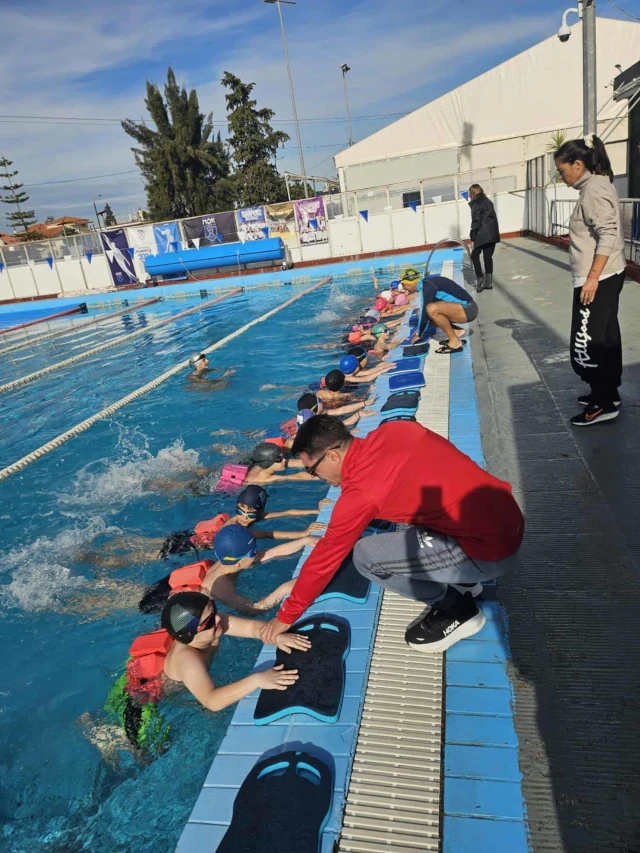
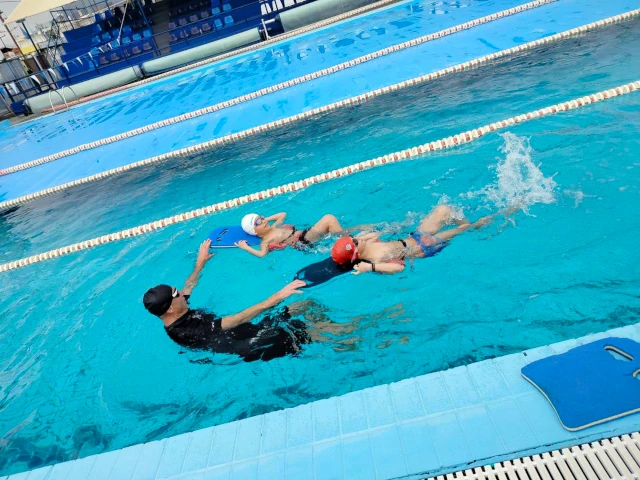
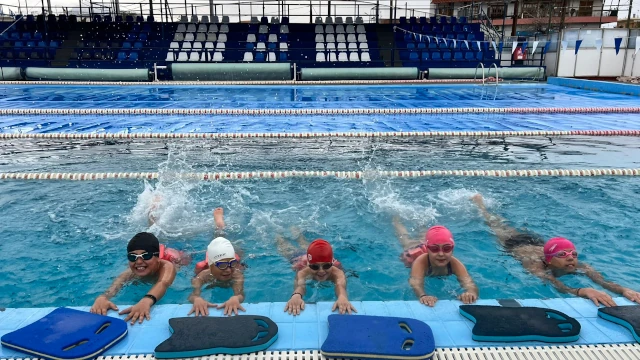
 The subject of swimming is implemented within the framework of the Physical Education course for students in the 3rd and 4th grades attending public Primary Schools of General and Special Education. It is incorporated into the official school timetable and is addressed to all students of the above grades, in areas where swimming facilities are available within a distance of up to 25 kilometers from the school units (Government Gazette Β΄ 2051/5-4-2024).
Key Objectives
 The implementation of swimming as a subject constitutes an innovation in the Greek educational system, aiming to improve students’ physical, mental, and cognitive well-being.
Teaching Staff
 In accordance with the provisions of Article 119 of Law 5224/2025 (Government Gazette A΄142), the School Swimming Program is staffed by Physical Education teachers (PE-11), either permanent or substitute, appointed by the Ministry of Education, Religious Affairs and Sports, who hold a specialization or professional license as swimming coaches, or possess relevant knowledge and experience in the subject.
Instructional Hours
 Teaching hours for swimming form part of teachers’ official teaching workload and are not treated separately for the purpose of completing their required hours, as they are included in the planning of the Ministry of Education, Religious Affairs and Sports and within the framework for calculating staffing needs (functional vacancies) in Physical Education, since swimming as a subject is part of the Physical Education curriculum.
A Coordinated Initiative
 The implementation of swimming instruction requires the cooperation and involvement of the relevant authorities (including the provision of free transportation—as stipulated—through the Region of Corinth, as well as the provision of swimming pools and related equipment through their respected Municipalities and the General Secretariat of Sports).
Program Coordinator
 In order to ensure the best possible organization, coordination, and implementation of the swimming Program—taking into account the complex process involved—the position of Program Coordinator has been established. A Physical Education teacher (PE-11) may be appointed as Swimming Coordinator upon application, and may serve for more than one neighboring Directorate of Primary Education within the respective Regional Directorate of Education.
Student Health Certificate
 The necessary requirements for students’ participation are a valid Student Health Certificate stating “participation without restrictions,” as well as a signed Parent/Guardian Declaration permitting the student’s transportation to the swimming facility.
Accompanying Teachers
 The Physical Education teacher of the school unit primarily accompanies the classes to the swimming facility. By decision of the Teachers’ Association, a teacher of another specialty, as well as Special Education Support teachers, may also accompany the students.
INCLUSION IN SWIMMING
OUR FACILITIES
The lessons are conducted in a completely safe environment at both municipal facilities. The water in both pools is maintained at a temperature of approximately 27°C.
Regular water quality sampling checks are conducted, the facilities are heated, and all hygiene regulations are strictly observed both around the pools and in the changing rooms.

Loutraki Municipal Swimming Pool
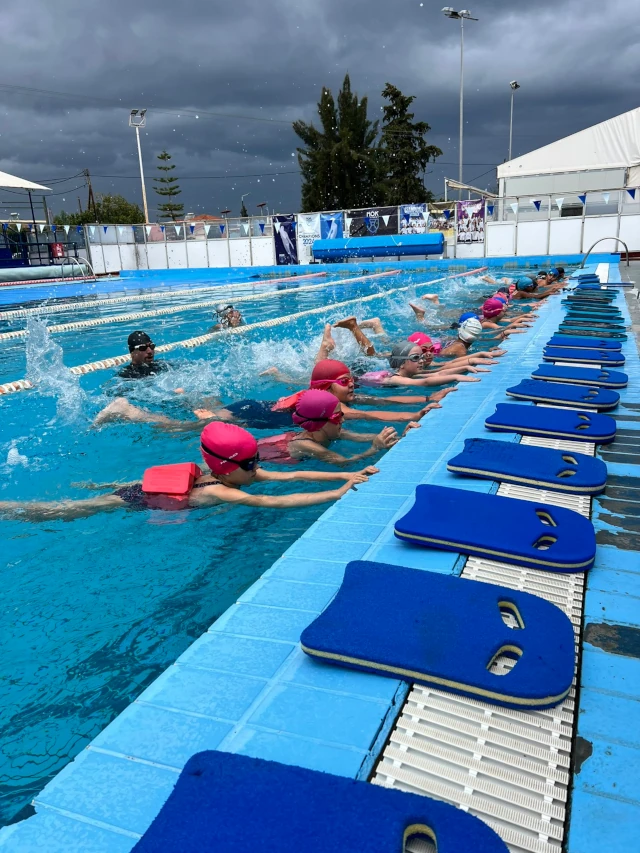
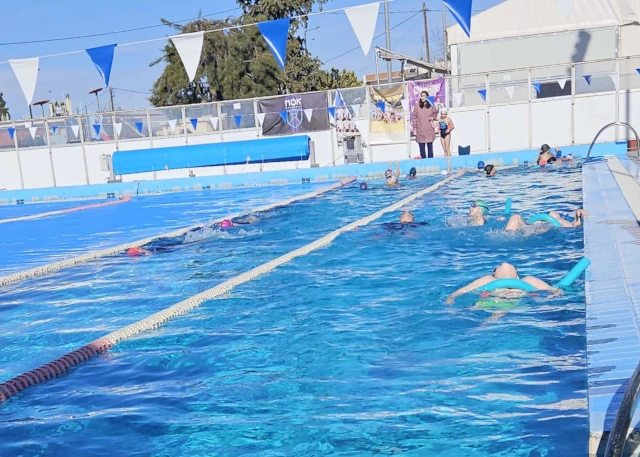
The Loutraki Outdoor Swimming Pool is located in the Magoula area of Loutraki. At a distance of approximately 450 meters from the Sports Hall, it is bordered to the east by a municipal property plot with frontage on the Loutraki–Isthmus provincial road.
Within the site, there is one (1) stainless steel swimming pool measuring 50.00 × 21.00 meters, one (1) stainless steel swimming pool measuring 25.00 × 21.00 meters, shared changing rooms, a mechanical equipment room, a pump room, and one (1) reception area for the public.
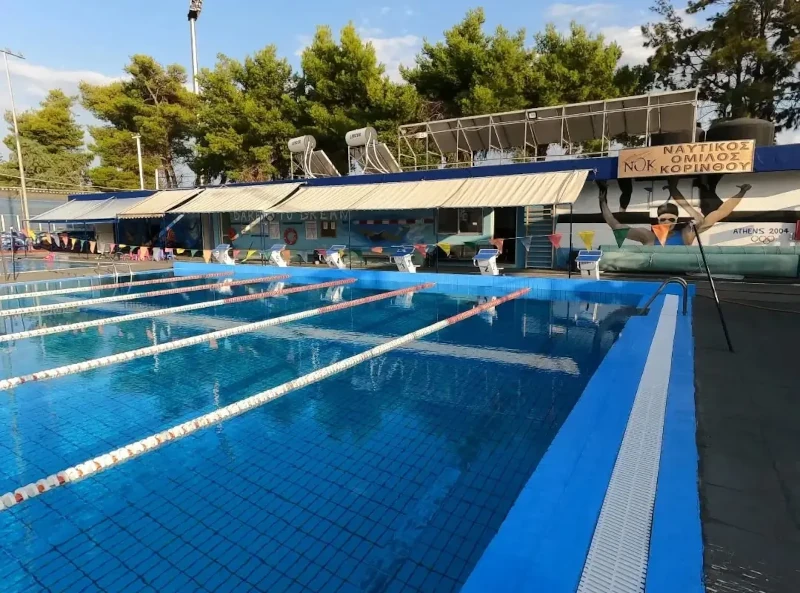
Corinth Municipal Swimming Pool
The Corinth Outdoor swimming pool of the Municipality of Corinth is located behind the correctional facilities and includes one (1) built swimming pool measuring 25.00 m × 21.00 m, one children’s built training pool for learning swimming, shared changing rooms, a mechanical equipment room, and a pump room.
It serves as the home base of the Nautical Club of Corinth, which is the largest swimming club in the Corinth region.
SWIMMING EQUIPMENT

In order to participate in the Swimming lesson, students are required to bring the following:
Swimsuit and a second set of underwear
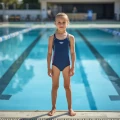
Any type of swimsuit, preferably a one-piece for girls
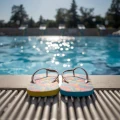
Flip-flops
Pool sliders, Crocs, etc.
Swimming cap
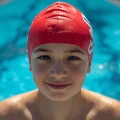
Preferably a silicone swimming cap to help keep the hair dry
A large towel or bathrobe, and a small towel for the feet

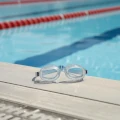
Swimming goggles
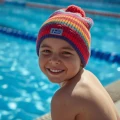
Beanie Hat
To protect the head after the lesson
A loose-fitting tracksuit
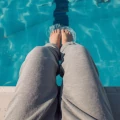
It should be made of cotton and not cling to the skin, unlike leggings or jeans, which can make children uncomfortable and delay getting dressed. Socks should also be loose-fitting.
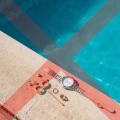
The wearing of jewelry is not permitted
Watches, necklaces (e.g. crosses), earrings, rings, etc.
GUIDELINES FOR THE SWIMMING LESSON
Students should be aware that, within the swimming pool facility:
Additional hygiene rules: Students are required to:
Students are reminded that, for safety reasons, the following are strictly prohibited:
What to keep in mind about eating before the swimming lesson:
1/4
- They may change clothes only in the changing rooms.
- They must take a shower before entering the pool area.
- They must use the toilet before the lesson. If they need to use the toilet during the lesson, they must always be accompanied by the Physical Education teacher or the accompanying teacher. Under no circumstances is urination in the swimming pools permitted.
- They may enter the pool area only together with their class and under the supervision of the accompanying teacher.
- They must wear flip-flops when entering the pool area.
- Entry into and exit from the water is allowed only via the ladders or starting blocks and only upon instruction from the Physical Education teachers responsible for the lesson. Diving from the sides of the pool, long underwater dives and breath-holding are not permitted.
- In case of any health issue, they must immediately inform the Physical Education teacher responsible for the lesson or the accompanying teacher.
- They should not leave valuables in the changing rooms. The swimming facility management bears no responsibility in case of loss.
- In the changing rooms, students are accompanied by teachers of the same gender, who are responsible for their supervision and for ensuring that the space is used without the presence of other adults.
2/4
- They should take a shower after leaving the pool.
- They should dry their feet thoroughly before putting on their socks.
- They should allow their feet and shoes to air properly.
- They should change their socks frequently, ensuring they are clean and dry.
- They should hang their swimsuit and bathrobe at home to dry thoroughly before the next lesson.
- They should not swim if they have a fever or an open wound.
3/4
- Walking barefoot in the pool and changing room areas.
- Running and playing in the pool and changing room areas.
- Playing in the water without the instruction of the Physical Education teacher.
- Bringing sharp and/or glass objects into the pool area.
- Chewing gum or candy during the lesson (risk of choking).
- Wearing jewelry, watches of any kind, etc. (risk of serious injury or loss of the item) during the lesson.
- Using sunscreen, warming ointments (as they interfere with water chlorination and disinfection), or sea/diving equipment (such as masks, flotation devices, fins, etc.).
- Entering the pool by individuals with open wounds, temporary skin conditions, contagious diseases, or viral infections.
4/4
- For safety reasons, swimming is allowed only if at least three (3) hours have passed since the last meal.
- If students have swimming during the first or second teaching period, it is preferable not to drink milk in the morning, but they should not forget to eat something light.
- If they have swimming during the third or fourth teaching period, they should eat their breakfast and may have their mid-morning snack after the swimming lesson.
- If they have swimming during the fifth or sixth teaching period, they should eat a normal breakfast and may have a light snack during the first long break.
- They should avoid cheese pies, spinach pies, chocolate croissants, filled sweet breads (tsoureki) with cream and icing, chips, and similar products.
INFORMATION FOR PARENTS
Swimming is considered by many doctors and educators to be the ideal sport, as it greatly contributes to both the physical and mental health, as well as the overall development, of children and young people.
It involves minimal risk of injury, does not place strain on the musculoskeletal system during a child’s developmental years, and at the same time provides a full-body workout while strengthening the cardiovascular system. Children are born with a natural affinity for water. The earlier they come into contact with it, the more easily they will learn to swim, overcome fear of water, and enjoy all the benefits that exercise in water provides.
(Click for more information)
Experts consider the ideal age for a child to begin learning how to swim to be between 3.5 and 4 years old, as at this stage they are able to understand and follow instructions given by their instructor. There are also infant swimming programs for children from 3 months of age and older, which operate under the guidance of experienced and qualified swimming coaches. Let us now look in more detail at the most important benefits children can gain through their involvement in swimming.
At this point, it is important to emphasize how crucial it is for children not to interrupt their training (due to cold weather, winter conditions, or other factors), but instead to maintain consistency and continuity in order to achieve the best possible results in terms of both their health and their swimming progress.
The Benefits of Swimming
FOR OUR YOUNG STUDENTS
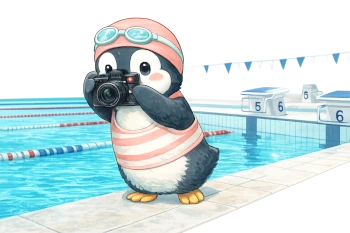
Below is a short story: the first day of swimming lessons for our little penguin. Can you help it pack its school bag and remember the swimming pool rules?
A wonderful day begins

“Today is my first swimming lesson. Yayyyyy!”

“I need to pack my bag for my swimming lesson. Can you help me?”

“Perfect!!! My bag is ready, and the only thing left is to remember the swimming pool rules.”

At least 3 hours must have passed since the last meal before entering the pool.

“I go to the toilet before entering the pool, and I don’t pee in the water.”

“I always take a warm shower before entering the pool and after I get out.”

“We don’t push or pull our classmates in the pool area.”

“We never run in the pool area because we might slip and fall.”
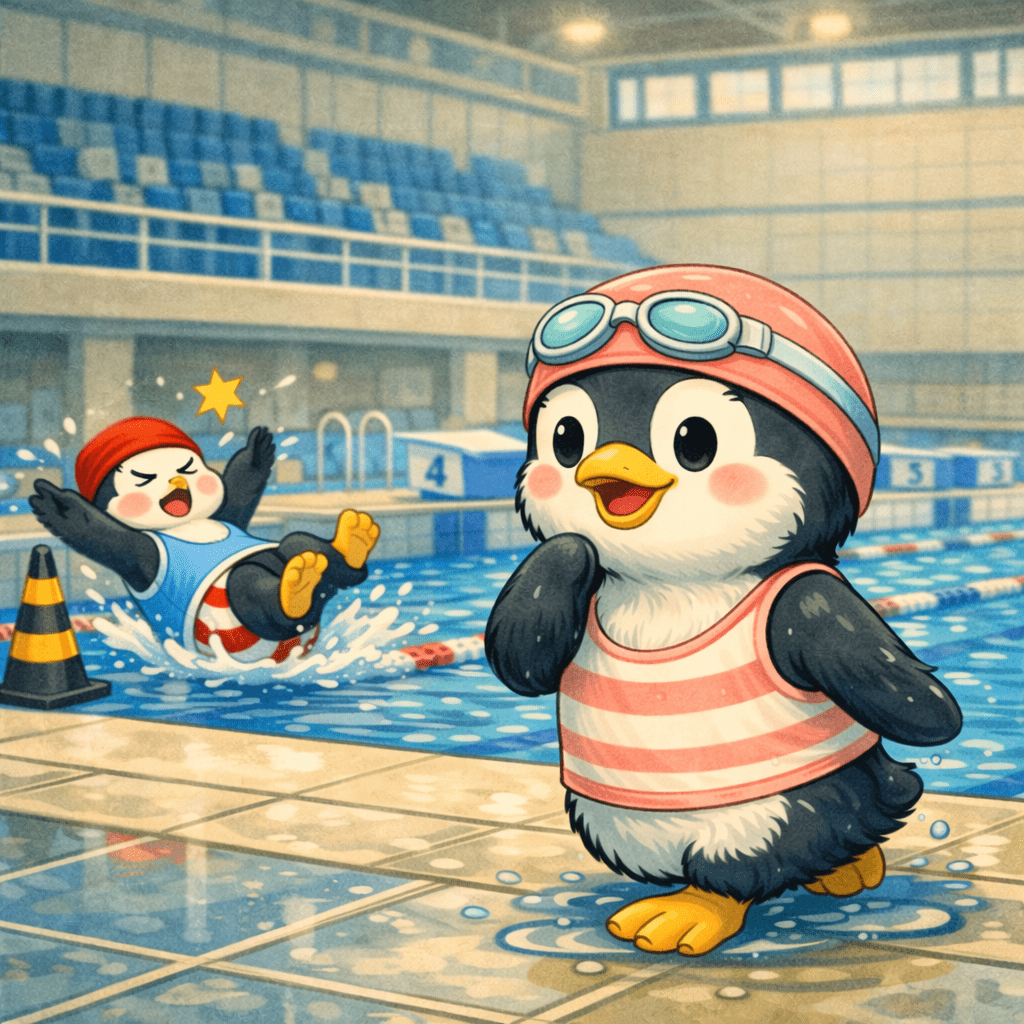
“When we feel cold, we get out of the pool.”

“We always swim on the right side of the lane.”
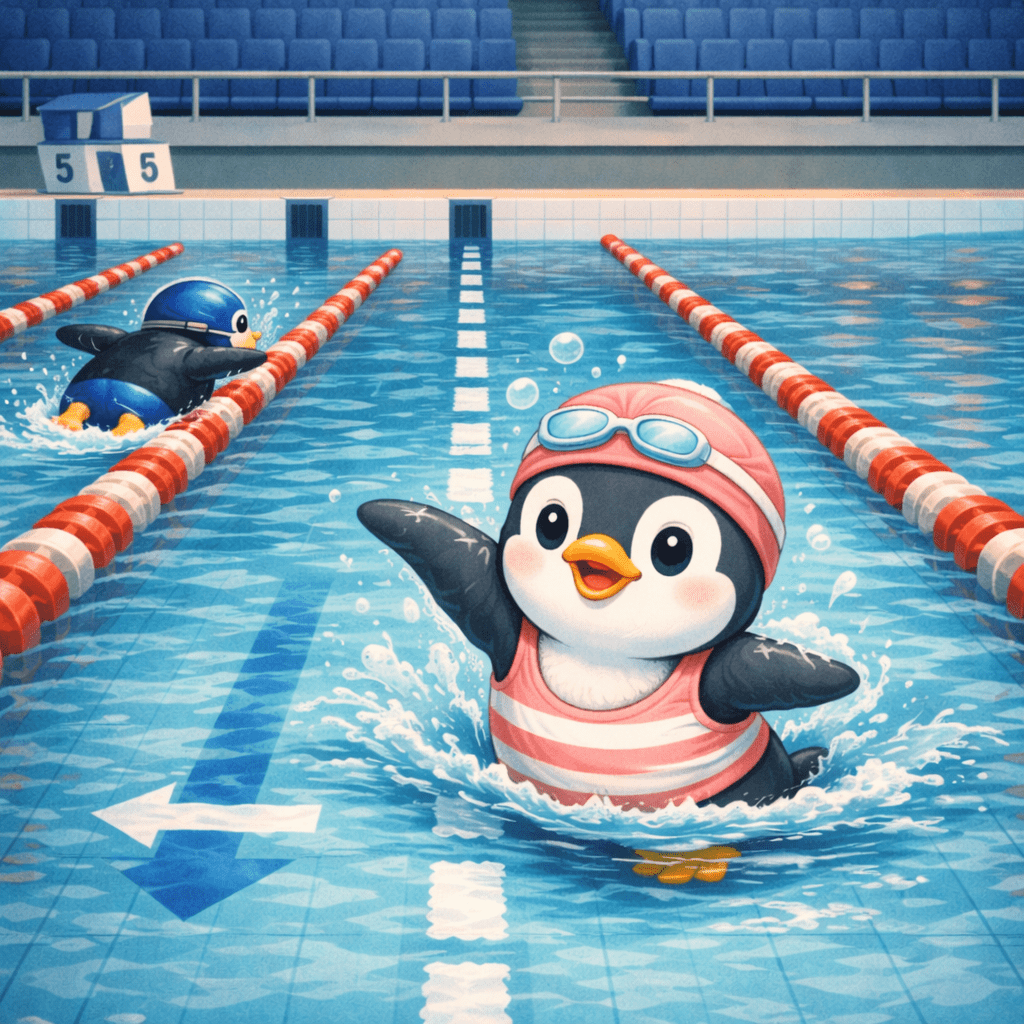
“We don’t hold onto or push our classmates into the water.”

“We did it and had a great time!”

“We dress warmly after the swimming lesson so we don’t get cold.”
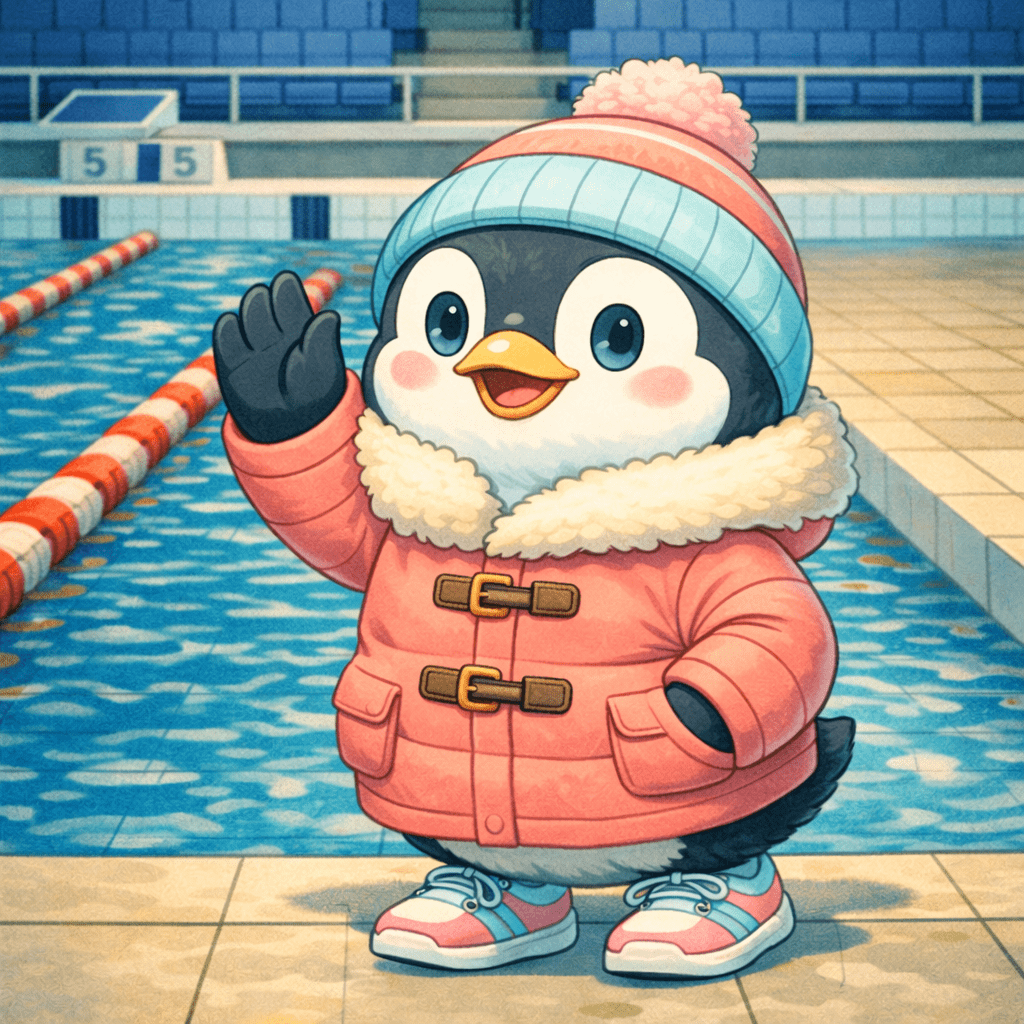
“The swimming lesson is over, and we can’t wait for next time. THANK YOU!!!”

CONTACT US
For any questions regarding swimming lessons in primary schools in the region of Corinth, please do not hesitate to contact us.
Click here to contact us
Gallery